Ashraf Engineer
April 29, 2026
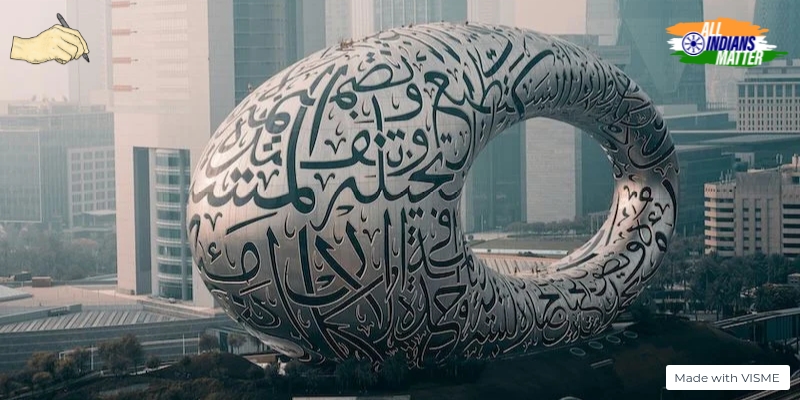
The United Arab Emirates (UAE) is a federation of seven Middle Eastern emirates with no rivers, very little arable land and a population smaller than Mumbai’s. What it has lacked in size and numbers it has more than made up for in economic might. Recently, it sought to back that up with two major steps.
In the space of a few days, the UAE announced that it was quitting OPEC, a cartel of major oil producers it had been a member of for nearly 60 years. Separately, it began talking to Washington about a currency swap arrangement that would insulate it from future economic shocks. Taken individually, each move is significant. Taken together, they tell the story of a country that thinks a crisis is too good an opportunity to waste.
Let me try to explain what happened and why it matters, especially to India.
First, OPEC
The Organisation of the Petroleum Exporting Countries is essentially a club that decides how much oil its members can sell to the world. The idea is that if everyone agrees to limit supply, prices stay high and everyone earns more. Also, controlling crude supply gives it power in a way that often even military might can’t. It has worked, more or less, for its members for decades.
However, the UAE has been unhappy with the arrangement for years. It can produce a great deal more oil but OPEC membership hasn’t allowed it to. Think of it as a business that has a warehouse full of goods but is only allowed to sell a fraction of them because the trade association says so. The UAE thinks the arrangement is unfair and that the club is overly dominated by Saudi Arabia. It has been itching to break free and so it did.
Effective May 1, 2026, the UAE no longer has production limits. It is likely to go from producing 3.4 million barrels of oil a day to 5 million barrels a day by 2027.
Now, the currency swap
Around the same time, there were media reports that the UAE had asked for a special financial arrangement with the US – a currency swap line.
A currency swap line is a bilateral agreement under which two central banks exchange agreed amounts of their respective currencies for a defined period, with a commitment to reverse the exchange at the same rate on a fixed future date. It’s a liquidity backstop. Essentially, the UAE wants the US to guarantee that if it ever runs short of dollars, which is used to trade most the world’s oil, the US will step in and provide them with the currency. It’s a financial safety net.
The UAE needs this because of the ongoing war (or stalemate, depending on how you view the situation) between the US and Iran. It has severely disrupted shipping through the Strait of Hormuz, a narrow sea passage through which a fifth of the world’s oil normally flows. The UAE’s oil exports have been badly affected and so its economy, which runs on oil money, has taken a hit. The swap line is an insurance against things getting worse.
To be clear, this not a handout. The UAE is among the wealthiest countries in the world. It has $270 billion in foreign exchange reserves and trillions more in its sovereign wealth funds. It does not need the money. What it needs is a guarantee. And it showed it understood how to get it.
The UAE let it be known that if they ran short of dollars because of a war they did not start or ask for, they might be forced to sell their oil in Chinese yuan instead. That made Washington sit up and take notice.
The dollar’s dominance in the global oil trade is one of the US’ most powerful economic advantages. It means that every country in the world that needs oil, which is every country in the world, must first acquire dollars to buy it. This creates a permanent demand for the dollar that keeps it strong and gives the US enormous financial power. Any threat to that arrangement gets Washington’s attention quickly.
So, the UAE was not begging. Instead, it was reminding the US that it is under economic pressure because of the US’ war and that it has options.
When you look at the OPEC exit and the currency swap request collectively, they are fundamentally about the UAE shedding arrangements that limit what it can do. OPEC’s system capped how much oil it could produce. Dependence on the dollar, without any backstop, left it exposed to shocks it had no hand in creating.
What this means for India
India imports nearly half its oil from the Middle East. Nearly 45% of our crude comes from the Gulf, and the UAE is one of our largest suppliers. The price India is paying for crude has risen because of the war, which, in turn, is raising the prices of your petrol, cooking gas, electricity and groceries. Most of the cooking gas that comes to Indian homes through the Gulf originates from the UAE and its neighbours.
For India, the good news is that a UAE that is free to pump as much oil as it wants is likely to push global oil prices down. For India, which imports more than 85% of its oil, cheaper crude is good news. It reduces the import bill and eases inflation.
There is also the currency dimension. India and the UAE signed an agreement in 2023 to trade in rupees and dirhams rather than dollars. The ‘local currency settlement agreement’ was a small but meaningful step toward reducing our dependence on the dollar for energy purchases. The UAE’s growing assertion of financial independence, including its willingness to consider non-dollar arrangements, creates space to deepen that rupee-dirham relationship. India should move quickly to take advantage of it.
Geopolitically speaking, India has spent years cultivating strategic autonomy – having good relations with the US, Russia and China without being wholly dependent on any of them. The UAE is doing something similar.
***
For India, the lesson offered by the UAE is worth absorbing. In a world where old institutions are weakening and the big powers are increasingly focused on their own interests, smaller and mid-sized countries that move quickly, think clearly and play their cards well can reshape their circumstances in ways that would have seemed impossible even a few years ago.