Ashraf Engineer
June 17, 2026
In February, I wrote a column for NewsMeter asking a simple question: India’s economy is “winning”, so why does it feel like we’re losing? When we’re among the fastest-growing economies in the world, why are we not seeing its benefits on the ground?
The data I cited was not obscure. The National Crime Records Bureau (NCRB) figure showing 13 suicides a day linked to unemployment. Youth unemployment (ages 15 to 29) at 14.9% nationally, hitting 18.8% in urban areas. Net foreign direct investment (FDI) that had turned negative (more money leaving India than entering it). A gross domestic product (GDP) number of 8+% that, by every behavioural measure, didn’t seem to be landing anywhere people could actually feel it.
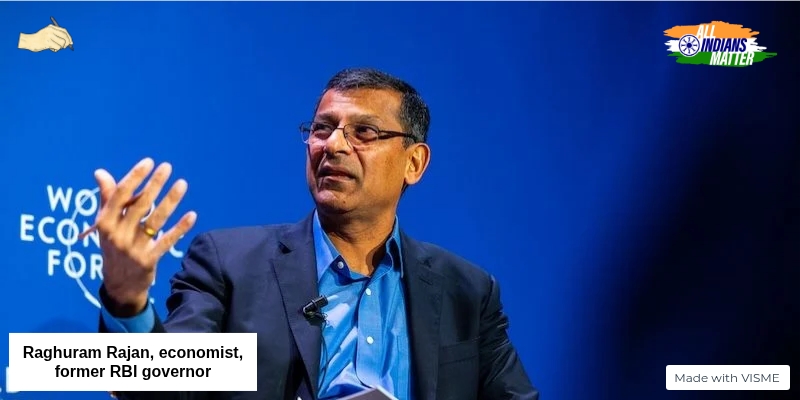
Four months later, Raghuram Rajan, renowned economist and former governor of the Reserve Bank of India (RBI), told the media essentially the same thing. “Something is off,” he said. GDP is growing at over 7%, but corporate investment is absent. FDI is declining and foreign investors are hesitating to fund manufacturing projects. The economy’s roadmap lacks clarity beyond the aspiration to become developed by 2047.
In the NewsMeter column, I pointed to the collapse in FDI. Net FDI into India fell 159% in August 2025, with outflows exceeding inflows. I noted that this was the second time in that financial year that more money had left the country than entered it. I flagged that domestic private investment had not picked up the slack. I argued that economic growth that doesn’t create quality jobs is growth without purpose and that the GDP number is an abstraction, a story the government tells about itself that bears increasingly little relationship to what companies are actually doing with their capital.
What the investment gap means
Rajan’s formulation was more precise, as you’d expect, but the argument was identical. If businesses aren’t investing, he said, it means they aren’t witnessing the demand that should accompany the growth numbers. The hesitance is itself evidence of a disconnect.
Investment behaviour as a signal was his most important point. When companies don’t invest, they are making a statement. They don’t see the demand that the GDP number implies they should be seeing. The expectation of growth is not generating the forward-looking confidence that should trigger capital expenditure. Something is broken.
Rajan is right that the absence of investment is the tell. It was the tell in February. It remains the tell now.
The February column made the same point through a different lens. Educated youth, people with at least a secondary education, made up nearly 66% of the unemployed in mid-2022, double the share from 2000. The stock market had been declining. These are not symptoms of an economy where 8% growth is reaching ordinary people and generating the kind of demand that should make businesses want to expand.
What is also worth noting is what Rajan said about the strategic vacuum. India’s economic vision, he argues, doesn’t extend much beyond the 2047 Viksit Bharat aspiration, which is a destination, not a roadmap. There is no defined strategy for manufacturing-led job creation, for bringing in the scale of FDI needed to shift the employment structure, for moving workers from low-productivity self-employment into formal, wage-paying jobs. This is the structural problem that lies beneath every quarterly GDP figure. Again, it is not new. It has been visible for years.
India has a problem with who gets heard on economic questions, and it is worth naming directly. I am not making a complaint but an observation about how truth travels in India.
There is an informal credibility tax that we levy on certain kinds of voices. Those from institutions such as the RBI, the International Monetary Fund, the World Bank or a US university are assigned authority by default. Voices from journalism, civil society or independent platforms are assigned opinion by default, even when they are working from the same data sets, applying the same analytical frameworks and arriving at the same conclusions.
This is not unique to India, but a feature of the global economic discourse. In India, however, it has a particular texture because the stakes of dissent are high. To question official growth narratives is to risk being labelled anti-national, a Pakistan-lover or simply ignorant. The informal cost of scepticism is borne much more heavily by journalists and independent commentators than by acclaimed economists who can speak from a higher ground.
The result is a peculiar lag, by which I mean that the evidence accumulates, independent analysts write it up, civil society speaks up, journalists point it out… but they are never heard. Eventually, someone with the ‘authority label’ says the same thing and suddenly it’s a national conversation.
The cost of the lag
Every quarter that passes without a serious national reckoning with the investment gap is a quarter in which the youth unemployment situation compounds. The International Labour Organisation’s estimate that 83% of India’s unemployed are young people is not a statistic that ages well when left unaddressed. The educated young person who cannot find work commensurate with their qualifications is not simply an economic problem. They are a political one, a social one and sometimes a human tragedy waiting to happen.
When the national conversation is delayed, policy responses are also delayed. Rajan’s intervention may accelerate a reckoning, although I doubt it with this government. If it does mean action, it would be welcome but the questions he is raising did not require him to become valid. They have been valid for long before he spoke up.
What needs to change
The answer is not simply that people should listen to journalists and independent commentators more. That’s too self-serving an argument, and too vague to be useful.
The more precise answer is that India needs a richer ecosystem of economic voices that are taken seriously. Former central bankers and IMF researchers should not be the only people capable of making economic scepticism respectable. The data is public and the analytical frameworks are not proprietary. What is missing is the institutional and media infrastructure that treats ground-level evidence (FDI numbers, employment surveys, NCRB data) as legitimate inputs into the national economic conversation rather than ammunition for opposition rhetoric.
Rajan has performed a service by saying what he has said. His credibility provides political cover for a conversation that needs to happen. But that service would not have been necessary if the conversation had started months earlier, when the evidence was just as clear.
It simply took Rajan to make it matter.