Ashraf Engineer
June 15, 2026
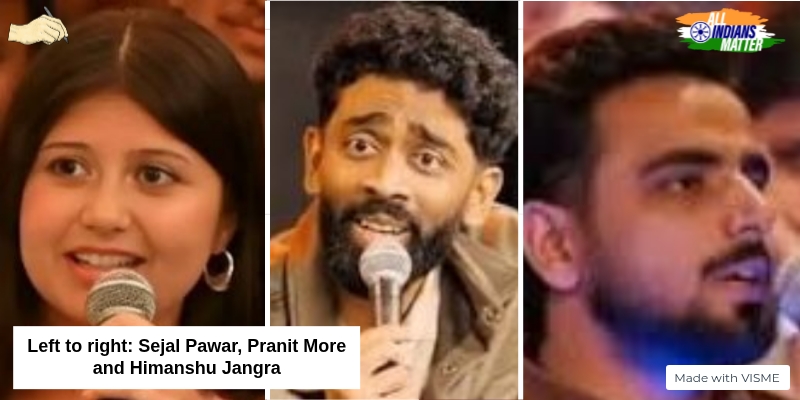
A couple of weeks ago, at a stand-up show by comedian Pranit More, a crowd work segment featured a 23-year-old web developer from Gurugram named Himanshu Jangra. Jangra described going on a date during which he spent Rs 370 on a plate of chicken biryani, and then seemed to suggest he felt entitled to something in return, implying that paying for a meal creates an obligation of some sort on the girl.
Thousands said that the remark revealed a transactional attitude toward consent, that an expenditure on a date somehow creates a debt. The clip spread rapidly across social media, turning into a flashpoint for debates about dating culture, gender dynamics and male entitlement.
The fallout: Jangra lost his job. This triggered a second wave of debate, this time about whether employers are right to act on an employee’s conduct outside of work, and where the line sits between personal expression and professional consequences.
The broader conversation remained the one about dating norms and gender expectations.
But that wasn’t the only controversial part of the show. During the crowd work, More asked whether medical professionals stay serious while working with cadavers or if doctors also crack jokes. A viral clip featured Dr Sejal Pawar, an MBBS student associated with Mumbai’s KEM Hospital, joking about comparing the private parts of male cadavers during anatomy training.
That led to a severe backlash from medical professionals and citizens for disrespecting body donors and breaching medical ethics. Members of the medical community noted that cadavers are traditionally revered as a student’s “first patient” or “silent teacher”, and that mocking donors could erode public confidence and discourage families from donating bodies to science.
Pawar deactivated her digital platforms and issued a public apology acknowledging her lack of sensitivity. More also deactivated his Instagram account amid the twin controversies.
What made it more combustible was the gender accountability angle. Many questioned whether standards of accountability should remain consistent regardless of gender, pointing to the contrast between Jangra losing his job while Pawar, at least initially, facing no comparable professional consequence.
So, in 48 hours, one comedy show ignited simultaneous national conversations about consent, medical ethics, gender double standards and online accountability.
This is a genuinely rich moment to take a look at ourselves, and the two controversies together tell us more than either does separately.
The fact that both incidents originated at a stand-up show is significant. Crowd work is a format where ordinary people speak unscripted, on camera. It’s like a confessional; people say things they’d say among friends, not realising they’re broadcasting to the world. The comedy venue has replaced the chai tapri as the space where unfiltered social attitudes surface. And social media ensures nothing stays in that room.
Private attitudes, public consequences
Both Jangra and Pawar were not performing; they were revealing their minds. What got exposed wasn’t malice, but assumption: that spending Rs 370 creates obligation, that cadavers are fair game for locker-room humour. These are attitudes that have always existed; what’s new is the mechanism that drags them into the public spotlight and applies consequences at scale. This is the thing about discourse today – the collapse of the public-private boundary.
The two clips together also created an uncomfortable symmetry that the internet couldn’t ignore. A man was pilloried for entitlement towards women; a woman was then caught expressing disrespect toward male bodies. The resulting “but what about her?” debate reveals how gender discourse has become almost entirely reactive and adversarial, less about building norms and more about scoring points. Each side reaches for the other’s scandal as a weapon. That’s not discourse, but a standoff.
Outrage without framework
What’s striking is that both controversies generated enormous heat but very little light. The biryani incident could have been a serious conversation about transactional masculinity and dating culture in urban India. The cadaver incident could have been a serious conversation about how medical training shapes attitudes toward the human body, or about the acute shortage of body donors in India and why it matters. Instead, both collapsed into termination, deactivation and apology. The internet is extraordinarily efficient at punishment and almost completely uninterested in understanding.
What does it say about India?
The country is going through an accelerated version of a culture shift that the West took decades to stumble through – around gender, consent, professional accountability and humour. However, it’s happening without the ‘institutional’ scaffolding: no media literacy, no tradition of public ethical debate, no HR culture… So, it all gets processed through viral outrage, which is a blunt instrument. The consequences are real: a man loses his job and a woman’s career is under a cloud. But the learning is close to zero.
Put together, what these two incidents reveal is a society that is morally awakening faster than it is morally maturing. The instinct to call things out is sharp but the capacity to think them through with nuance, consistency and proportion is lagging badly. And social media algorithms, which reward rage over reflection, are in no hurry to close that gap.
So, what now?
There is no single solution, but there are a few things that would move the needle.
Firstly, the architecture of social media is the root problem. Algorithms that reward speed and outrage over depth and nuance aren’t a bug but the business model itself. Real change would require platforms to structurally slow down virality; friction before resharing, reduced amplification of content generating only reactive emotion, more weight given to replies that add information rather than pile on. None of this will happen voluntarily. It would take regulation, and India doesn’t yet have the appetite or sophistication for it.
We also badly need a media that models better discourse. Journalists and commentators carry more responsibility than they acknowledge. Every time a writer frames a nuanced situation as a moral verdict, they feed the monster. The alternative isn’t fence-sitting but asking the harder questions rather than validating the easier emotions. India has a thin tradition of this kind of writing. It needs more of it, and it needs it to reach beyond the English-speaking elite.
Institutions that distinguish between correction and punishment are sorely lacking. Jangra losing his job is a symptom of institutions that have no mechanism between “ignore it” and “terminate”. What’s missing is the middle ground, a conversation, a consequence proportionate to the offence and an expectation of evolution. Most Indian workplaces and institutions aren’t built for that. HR culture in India is either absent or purely defensive. Building that capacity matters.
Comedy is growing fast in India, not just as entertainment but as social commentary. It needs to do more with what it finds
Comedians like More, whether they intend to or not, are holding up a mirror to society. Crowd work that simply gets a laugh is one thing. Comedy that surfaces an issue and then does something with it, even if it means making the audience uncomfortable in a productive way, is rare and valuable. The best social comedians have always been a step ahead of the mob, not accidentally in front of it. Vir Das does a terrific job of that.
Let’s not forget either that consistency as a cultural value.
The gender double-standard debate that erupted points to something deeper: we apply moral scrutiny selectively. We are outraged by what offends our tribe and lenient toward what offends the other side. Holding the same standard regardless of who is in the dock is genuinely difficult and genuinely rare. It must be modelled repeatedly by people with credibility before it becomes a social norm.
***
What we’re watching is the friction of a society in transition. The old norms around gender, hierarchy, the body and privacy are breaking down. New ones haven’t formed yet. That gap is uncomfortable and it will be filled temporarily by outrage because it is available and costs nothing. What we need to fill it permanently is harder to create: institutions, habits of mind, media culture and people willing to ask the second question rather than just reacting to the first.
That’s hard and very slow work but it’s the only kind that actually changes anything.