Tushar Gandhi
May 24, 2026
It was a disastrous press conference in Norway, one of the few instances of Prime Minister Narendra Modi coming up against fiercely independent media. He’s used to being asked questions like “How do you like to eat mangoes?” back home. He cut a sorry figure as he walked off.
Later, a leading Norwegian daily chose to lampoon him in a cartoon depicting him as a snake charmer. It was emblematic of a silly and reprehensible western outlook towards India, which has existed for decades. Predictably, it led to a wave of indignation back home from the bhakt brigade and the PM’s lapdog media. As a nation, we seem to have lost our sense of humour, our ability to accept being made fun of and our ability to pay it back in the same tongue-in-cheek manner. It’s unfortunate.
During the 1950s and 1960s, Parliament saw some very acerbic and sarcastic exchanges, including those between MP Feroz Gandhi, Pandit Jawaharlal Nehru’s son-in-law, and Krishna Menon, a senior minister. Gandhi questioned the Jeep purchase deal signed by Menon, which led to one of the first corruption accusations in independent India.
Gandhi and Menon were known to have heated and colourful arguments in Parliament. In one such instance, Menon contemptuously referred to Gandhi as being the prime minister’s pet hound. Without batting an eyelid, Gandhi is said to have retorted: “Sir, you have called me a pet hound and you, sir, are a pillar of society. Today, I am going to do to you what a hound does to a pillar.” Today, such a repartee would end in fisticuffs and suspension from Parliament.
Shankar, the eminent cartoonist featured Pandit Nehru in over 4,000 cartoons, many of them fiercely critical. I am sure at times his depiction would have disturbed and hurt Panditji, but despite this he admired Shankar’s work and is known to have told him to never spare him. Panditji once said about Shankar’s cartoons, and I quote from an article appearing in the ‘Print’ magazine, “Shankar has that rare gift, rarer in India than elsewhere, and without the least bit of malice or ill-will, he points out, with an artist’s skill, the weaknesses and foibles of those who display themselves on the public stage. It is good to have the veil of our conceit torn occasionally.”
Shankar admired Panditji for being a “truly great man”. He admitted that despite his severely critical cartoons, Panditji often thanked him for helping him spot his weaknesses. He liked to be reminded that he too was mortal. Perfection is not for any man, however powerful and highly placed he may be. Panditji had the wisdom to realise that.
Shankar did not spare viceroys and other leaders in pre-Independence India either. In a cartoon he drew in 1939, Shankar depicted Muhamad Ali Jinnah, the leader of the Muslim League, in a rather derogatory manner. He received a postcard form Mahatma Gandhi, Bapu, with some advice: “ Your cartoons are good as a work of art. But if they do not speak accurately and cannot joke without offending, you will not rise high in your profession. Your study of events should show that you have an accurate knowledge of them. Above all you should never be vulgar. Your ridicule should never bite.”

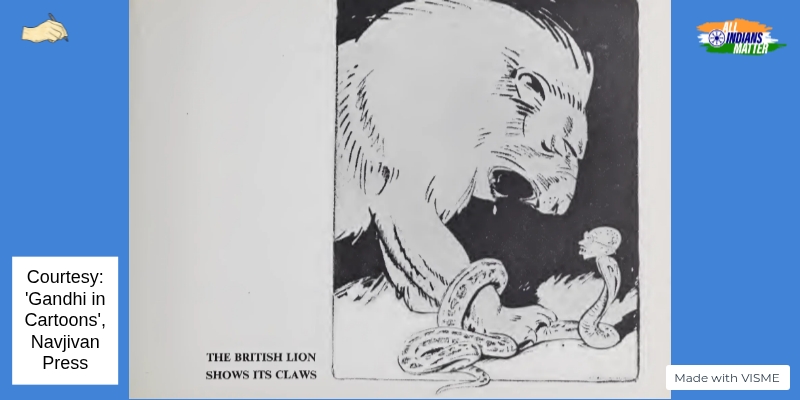
Courtesy: ‘Gandhi in Cartoons’, Navjivan Press.
When in 1946 after falling out with the Managing Editor of ‘Hindustan Times’, Devadas Gandhi, Bapu’s youngest son, Shankar quit the newspaper, Bapu inquired: “Did ‘Hindustan Times’ make you famous or did you make ‘Hindustan Times’ famous?” Shankar’s fearless cartoons had contributed largely to the popularity of the newspaper.
After quitting, Shankar started his own magazine of cartoons called ‘Shankar’s Weekly’, inspired by the British magazine ‘Punch’. Shankar described it as being fundamentally anti-establishment, while never toeing any particular line in politics or in anything else. The weekly became the launchpad of eminent cartoonists, such as RK Laxman, Narendra, Kevy, Bireshwar and Yesudasan, to name a few.
Unfortunately, the magazine shut during the Emergency, but not because of it. As Shankar explained, “We could have taken the Emergency in our stride, but the burden running a weekly magazine on a shoestring budget was too much.” Upon hearing of Shankar’s decision, Prime Minister Indira Gandhi wrote to him: “I learnt a few days ago about your decision to stop ‘Shankar’s Weekly’… It takes a great deal of strength of mind to close down what one has built through years of care and labour. You are the best judge. As you say, it is too much for one man, even when that man is an institution. We shall miss the journalist.”
Gandhi in cartoons

Courtesy: ‘Gandhi in Cartoons’, Navjivan Press.
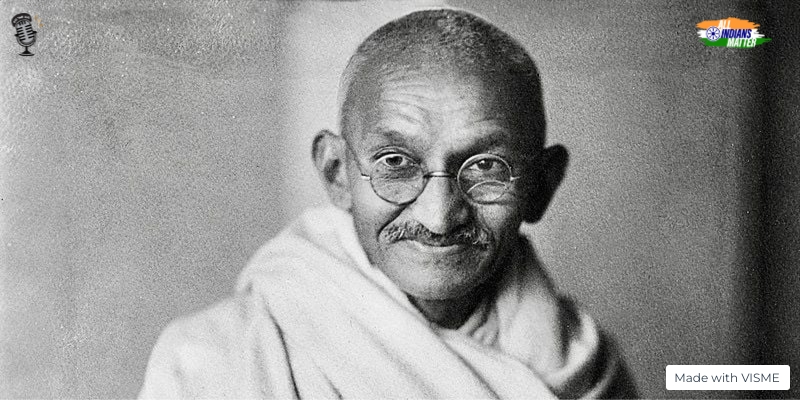
During his lifetime, Bapu was featured in several cartoons, many lampooning him more severely and from a typical western point of view in a derogatory manner than the one depicting Modi as a snake charmer.
A selection, ‘Gandhi In Cartoons’, was published in 1970, a year after his birth centenary in 1969 by Navjivan Trust. There are some pretty derogatory ones, which depict Bapu as a cobra, another shows him putting on a Nazi uniform and Hitler wearing his loin cloth. I am sure the editors of this book have left out the more vile ones. But today we would not be able to laugh off, let alone accept, such lampooning.
In today’s environment of such ‘sensitive’ sentiments, I wonder if cartoonists such as Shankar and Laxman would have survived. I doubt it. This mass ‘sensitivity’ isn’t a recent phenomenon, although it has been weaponised in the Modi age. Cartoonists have been charged with sedition, imprisoned and prosecuted during the UPA 2 government, too.
Writing in the ‘Harijan’ issue of December12, 1928, Bapu said: “If I had no sense of humour I would long ago have committed suicide.” Are we as a society committing mass suicide?
Tushar Gandhi, great grandson of the Mahatma, is an activist, author and president of the Mahatma Gandhi Foundation. Reach him here: gandhitushar.a@gmail.com.