Ashraf Engineer
June 29, 2026
Picture this – it will seem familiar. A young man graduates in the top 5% of his engineering entrance exam. His family in his home village celebrates for a week. Four years later, he gets a degree followed by an email outbox full of unanswered job applications. Now he works shifts at a courier company that has hired him not as an engineer but as a delivery executive. We are being told India’s GDP is growing at 7% to 8% but he isn’t feeling it.
Replace the engineering degree with any other qualification, the courier job with another menial one (or none) and it’s a story that we’re seeing all around us.
No wonder there’s a phrase doing the rounds: the collapse of the centre’s problem-solving capacity. (‘Centre’ refers to the political centre. Broadly, governments and parties that believed markets and technocratic management could solve most problems.)
Strip away the jargon and it describes something most of us have already felt: a growing sense that the people in charge don’t really have the answers anymore. That governments come and go, but the underlying problems – stagnant wages, missing jobs, unaffordable housing, young people with degrees but no future – stay exactly where they are.
We are not imagining this. The data bears it out.
The model that failed
For roughly two decades after 1990, the centre ran the world on a set of assumptions. Markets, properly managed, would spread prosperity. Globalisation would benefit all, even if unevenly. Technocratic institutions – central banks, trade agreements – would smooth out the rough patches. The job of the government was to keep the machine humming, not question it. This was Bill Clinton’s America. Tony Blair’s Britain. Manmohan Singh’s India opening to the world.
Then 2008 arrived and, not only did the model fail, it did so unfairly.
Governments stepped in to save the financial system. Banks were bailed out and bonuses returned but austerity was imposed on ordinary people and the services they use every day: hospitals, schools, housing. The people who caused the crisis got away and the people who had nothing to do with it paid the price.
The numbers tell the story. Between 1985 and 2014, the share of national income going to the top 10% rose from 30% to 35% in the European Union and from 37% to 47% in the US, according to Organisation for Economic Co-operation and Development data cited in a 2026 Frontiers in Political Science analysis. The gains from globalisation concentrated in “a narrow segment of workers with superlative talents, extraordinarily productive firms, or heavily agglomerated cities”. Everyone else got stagnation.
This is not just an economic statistic; it’s a political timebomb.
No answers, but you can’t question either
The political centre’s response to its failing made things worse. Question austerity, and you were branded an economic charlatan. Question free trade, and you were someone who wanted to constrict potential. Question immigration, and you didn’t understand demographics.
Each of these positions had a genuine point. But the political effect was to tell people that their lived experience – the shuttered factory, the daughter who can’t find work, the son who can’t afford rent – was less real than a spreadsheet.
Picture a worker in Bhiwandi whose textile job disappears after cheap imports flood the market. He goes to a government office and is handed a pamphlet about reskilling programmes that don’t exist in his town. His experience is real but the spreadsheet says the economy is growing. The disconnect between those two things is where political rage is born.
Ruben Nizard, Head of Sector Research and Political Risk Analysis at Coface, described this in the firm’s 2026 political risk assessment: there is “a common thread emerging for several years, both in advanced and emerging economies: growing frustration with economic and social conditions that are perceived to be in decline, and deep disenchantment among the population with the political classes in power”. Coface’s global political risk index reached 41.1%, a historic high, in 2025 and described the trend as structural, not cyclical.
Structural is the critical word. This is not a bad patch but a broken relationship between governing elites and the people they govern.
What filled the vacuum
The consequences are visible everywhere. In Europe, far-right parties have gone from fringe movements to major electoral forces. Austria’s Freedom Party won 29% of the vote in 2024, its best result ever. In Britain, six prime ministers resigned in 10 years, culminating recently in Keir Starmer’s exit less than two years after a landslide victory, brought down partly by the rapid rise of Nigel Farage’s Reform UK.
Ipsos polling across 30 countries found “sociopolitical tensions about the very ideas of globalisation, tensions within markets, tensions between citizens and even tensions within households”. Take note of the sequence: first comes the economic betrayal, then comes the cultural rage. The anger is not originally about identity. It becomes about identity when the economic grievance goes unanswered long enough.
In other words: people don’t wake up angry about culture. They wake up angry about their paycheque, their child’s future, their crumbling hospital. Culture war is what you get when economic war goes unaddressed.
This is what the collapse of the centre produces: a void. And voids, in politics, are never empty for long.
India: same story, different container
Now look at India. The template fits, but the local texture is different.
India’s political centre was never simply the free-market consensus. The Nehruvian developmental state was interventionist, paternalistic, held together by anti-colonial memory. When 1991 arrived, the liberalisation that followed felt like a release, particularly to the urban middle class.
In India, the legitimacy crisis that consumed Western centrists in the years after 2008 arrived later and with different triggers.
The Bharatiya Janata Party’s (BJP’s) rise from 2014 onwards fits the global populist template. It ran explicitly against an exhausted establishment, dynastic entitlement, a Congress that was unable to tell a convincing story about itself. The anger it channelled – about corruption, growth that seemed to bypass ordinary people – was real. But it fused that economic grievance with Hindutva, an ideological project with its own long, independent history.
The problem is that the BJP came to power promising not just cultural restoration but also economic transformation. Make in India, jobs, the aspiration that hundreds of millions of people under 35 would have a genuine stake in the future.
That promise has not been delivered.
The jobs that didn’t come
What does 8% GDP growth mean on the ground when it doesn’t create jobs? It means a family in Patna is celebrating India becoming the world’s sixth-largest economy while their son, who has a BCom degree, is driving an autorickshaw. It means a young woman in Lucknow with a nursing diploma can’t find a job because the health system is underfunded.
The numbers bear this out. As I wrote in a February 2026 column for NewsMeter, youth unemployment for the 15-to-29 age group stood at 14.9% nationally, hitting 18.8% in urban areas. The International Labour Organisation estimated that 83% of India’s unemployed were young people. The National Crime Records Bureau documented 13 suicides a day linked to unemployment.
A GDP of 7% to 8% that doesn’t translate into quality jobs is not growth.
As Raghuram Rajan noted recently, when companies aren’t investing despite the growth figures, they are making a statement. They don’t see the demand that the numbers imply they should be seeing. Something is broken.
2024 as a signal
The 2024 general election was India’s clearest sign that the feedback loops between economic underperformance and political consequence are not entirely disconnected.
The BJP won 240 seats – a big drop from its 2019 tally of 303 – and lost its outright majority. For the first time in a decade, India returned to a coalition government. Unemployment, inflation and rural distress were key issues – a stark shift from the nationalism and religious sentiments that dominated in 2019. The economic promise had fallen flat in the face of high inequality and unemployment.
Think of it this way: in 2019, many voters in Uttar Pradesh and Bihar chose the BJP partly on aspiration, a sense that something better was coming. By 2024, enough of them had waited long enough and seen little enough that the vote shifted. Not dramatically and not to a clear alternative but the shift was real.
Welfare delivery that simultaneously alleviates poverty and builds political loyalty, media ownership that limits scrutiny, the erosion of institutional independence have widened the gap between economic underperformance and political consequence. But, as 2024 showed, they don’t eliminate that gap. They defer it. A reckoning deferred is not a reckoning avoided.
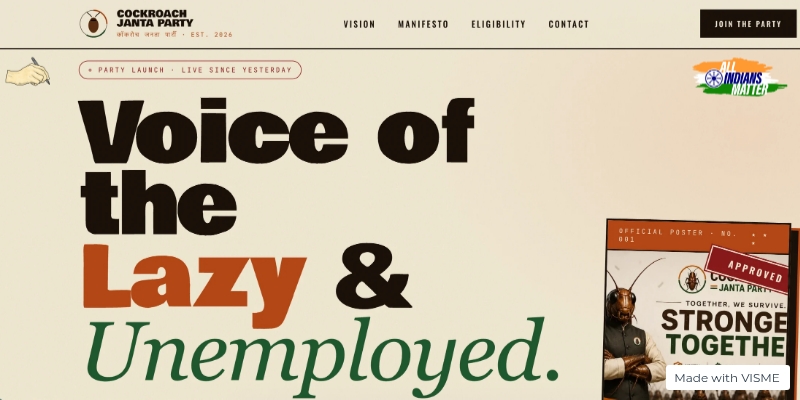
The Cockroach Janta Party – the movement that emerged after the chief justice reportedly compared unemployed youth to cockroaches – is a what pressure building under the surface looks like when it finds expression. It’s about young Indians with degrees, no jobs and a political establishment that responds with dismissal.
The unbuilt alternative
Here is what the global and Indian stories share: what’s missing is not a better version of what already exists; it’s something that hasn’t been built yet.
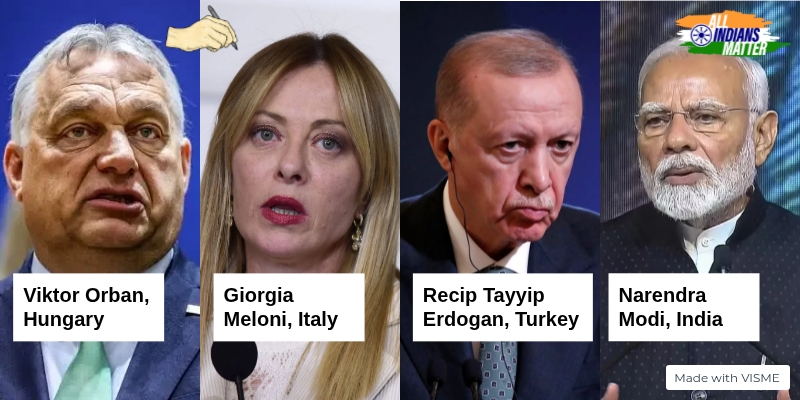
Globally, what the moment requires is a political formation willing to use state capacity to direct investment, shift the tax burden and subordinate short-term market preferences to long-term social stability. All this while simultaneously preserving pluralism, defending institutions and being credible to a sceptical public. The populist right can’t do this because it channels anger without addressing issues.
In India, the unbuilt alternative needs a specific shape. It needs to speak to the aspirational young, the informal worker, the farmer, the urban professional and the religious minority in a single coherent economic and political language that is neither old Congress paternalism nor counter-identity politics. The INDIA alliance is a coalition of convenience, not a governing idea. That distinction matters – you can win with a coalition of convenience but you cannot govern with one.
***
What both, the global moment and the Indian moment, are waiting for is a politics that can tell the truth about what happened: the model failed, the gains were not shared and the anger is legitimate even when the prescriptions being offered are dangerous. And then offer something genuinely different.
The centre cannot hold. The question is what gets built in its place.